
How to avoid holiday scams is something most people only think about after they’ve already been targeted by fake deals, phishing emails, or delivery scams. Holidays create the perfect environment for cybercriminals: high transaction volume, emotional decision-making, and reduced attention to security details.
To truly understand how to stay safe, it’s not enough to list tips. You need to see what these scams actually look like. Below, we break down the most common holiday scams with real-world examples and explain how to spot them before they cause damage.
Why holiday scams are so effective
Holiday scams work because they exploit urgency and trust. Scammers know people are expecting deliveries, hunting for discounts, and donating to causes. By mimicking familiar brands and seasonal language, attackers blend seamlessly into legitimate holiday communications.
PhishFort monitoring shows that phishing campaigns spike dramatically during November and December, often impersonating e-commerce brands, logistics companies, and payment providers. More threat intelligence examples can be found at Phishfort’s blog section , but let’s deep dive into the most common scenarios.
1. Fake online shopping websites
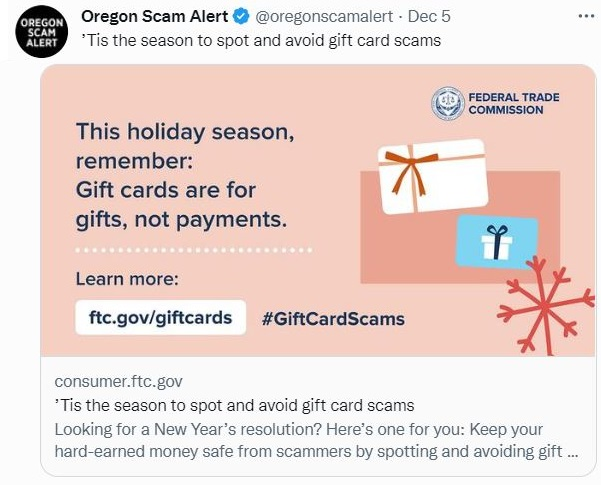
One of the most common holiday scams involves fake e-commerce stores offering unbelievable discounts on popular products.
How the scam looks
These sites often copy branding, product images, and layouts from real retailers. Prices are heavily discounted, countdown timers create urgency, and customer reviews are either fake or copied.
Red flags to watch for
Misspelled domain names
No clear contact information
Only accepting wire transfer or gift cards
Recently registered domains
How to avoid holiday scams like this? Always check the website’s domain age and reviews. If the offer feels rushed or unusually cheap, pause and verify before purchasing.
2. Holiday phishing emails impersonating retailers
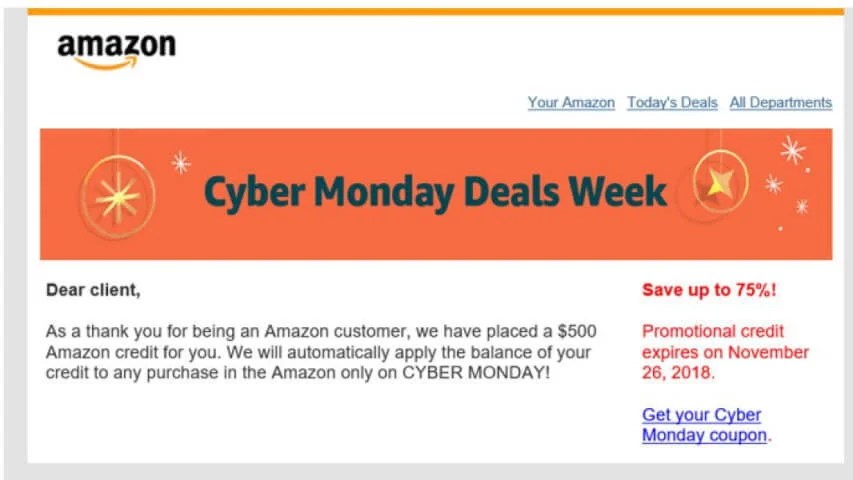
Phishing emails surge during the holidays, often posing as order confirmations, refund notices, or account issues.
How the scam looks
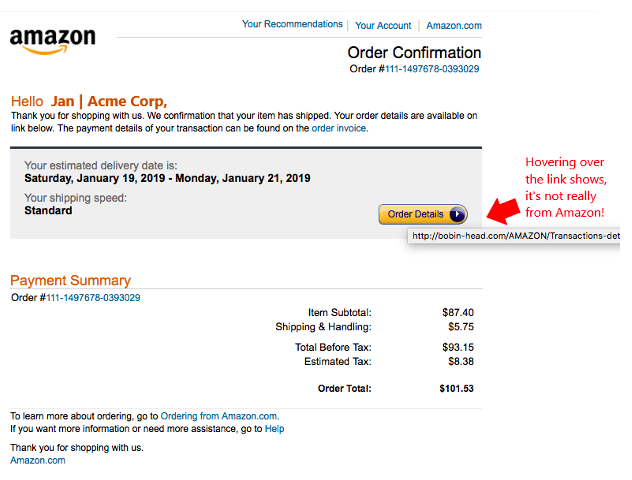
Emails appear to come from trusted brands like Amazon , Walmart , or Apple . They may claim an issue with your order or payment and include a link to “fix the problem.”
Red flags to watch for
Generic greetings instead of your name
Unexpected attachments or links
Spelling or formatting inconsistencies
Sender addresses that don’t match the brand
How to avoid holiday scams via email? Never click directly from an email. Visit the retailer’s website manually or check your account through the official app.
3. Fake delivery and shipping notification scams
Delivery scams increase sharply during holiday seasons when people expect multiple packages.
How the scam looks
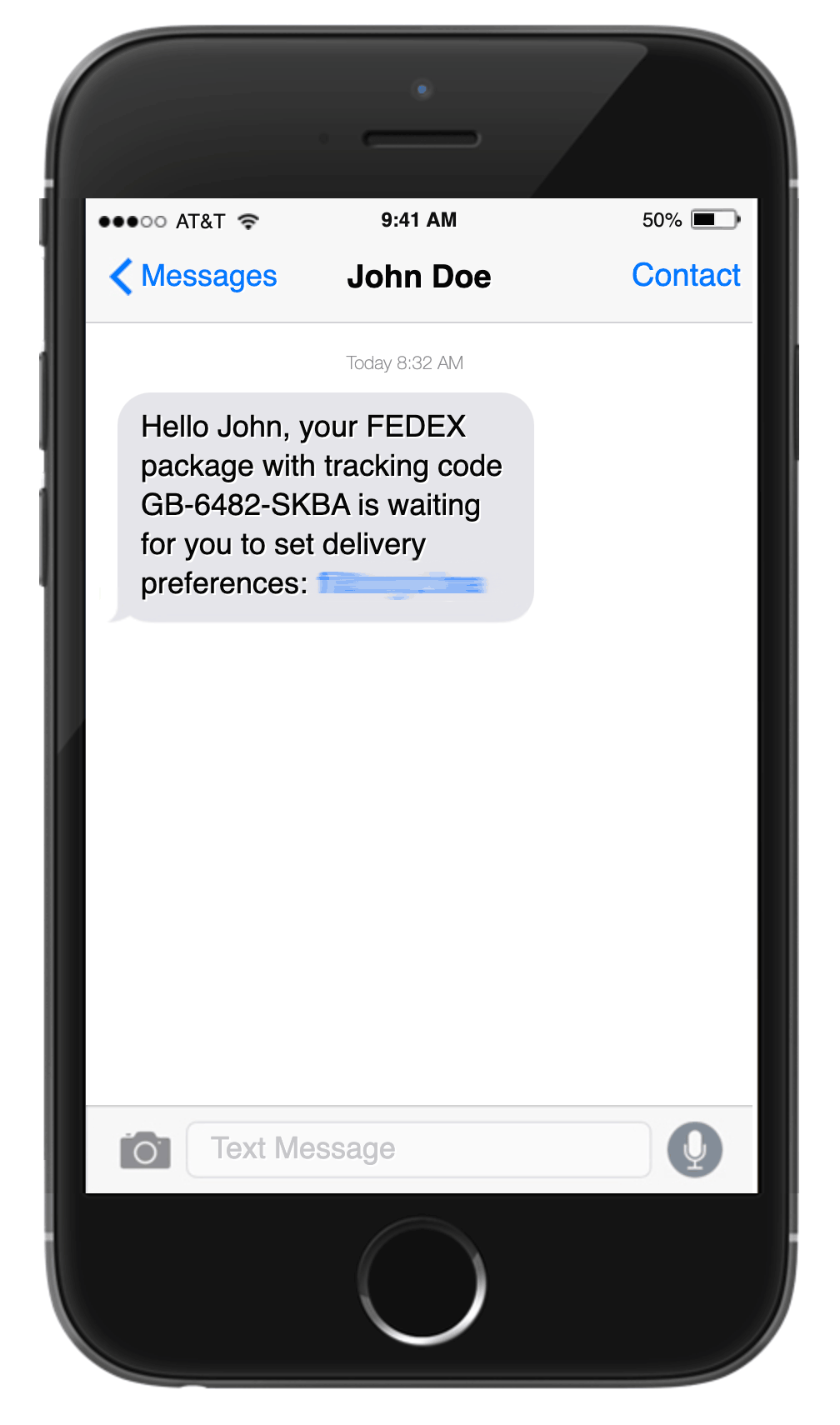
Victims receive SMS or email messages claiming a package couldn’t be delivered due to an address issue. A link is provided to “reschedule delivery.”
Red flags to watch for
Shortened URLs
Requests for personal or payment information
Vague package details
Unexpected carriers
How to avoid holiday scams related to deliveries? Track packages only through official carrier websites. Legitimate delivery companies never ask for sensitive information via SMS.
4. Gift card scams during the holidays
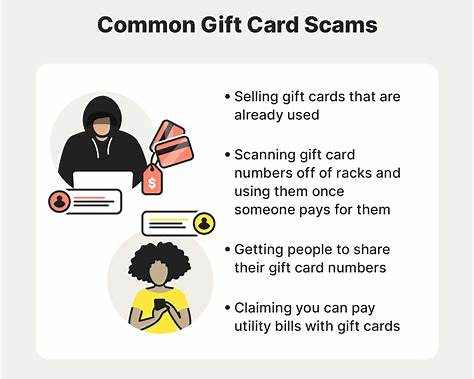
Gift card scams spike during holidays due to their popularity as gifts.
How the scam looks
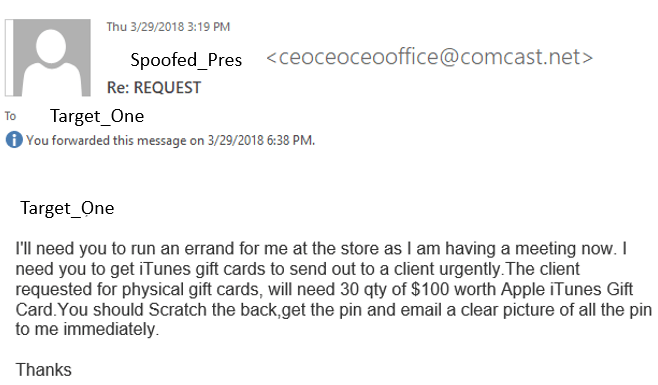
Scammers impersonate managers, coworkers, or family members requesting urgent gift card purchases for last-minute gifts or emergencies.
Red flags to watch for
Pressure to act immediately
Requests to share gift card codes
Unusual communication tone
How to avoid holiday scams involving gift cards: No legitimate organization or employer will ever request payment via gift cards.
5. Fake charity scams
Holiday generosity is often exploited through fake charity campaigns.
How the scam looks
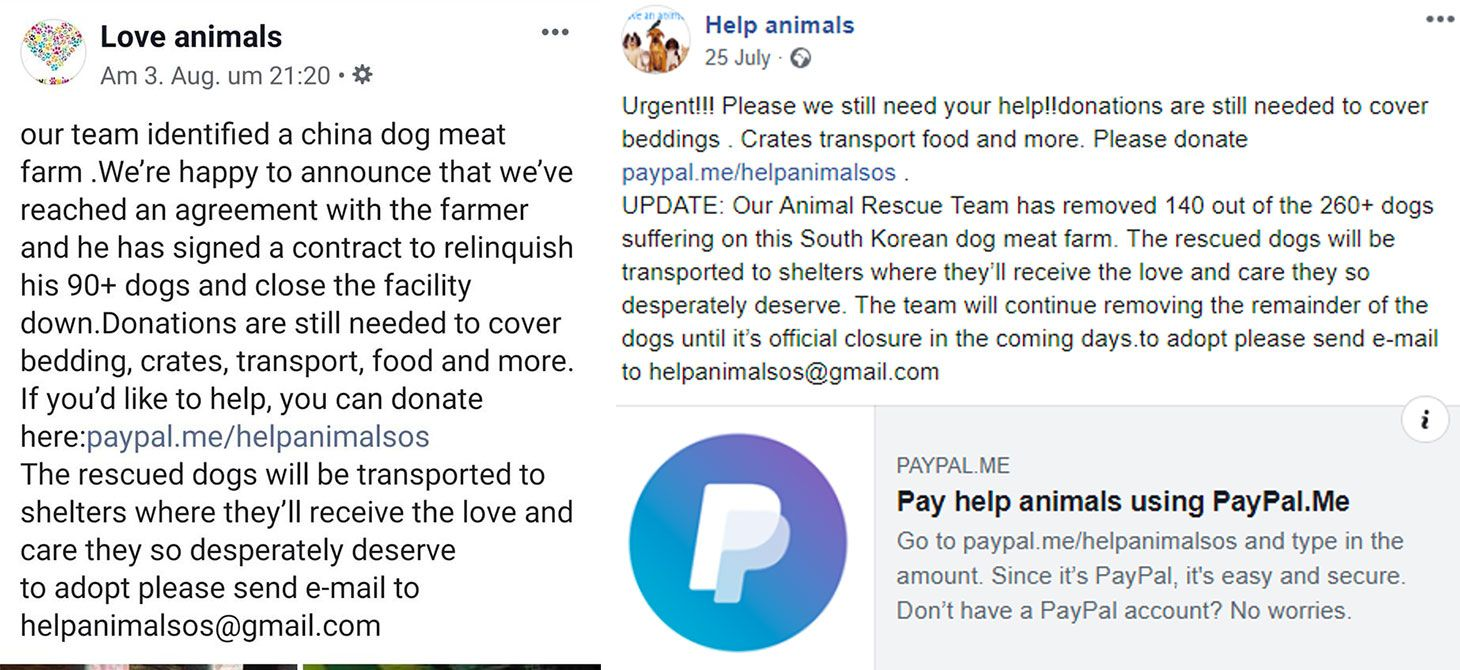
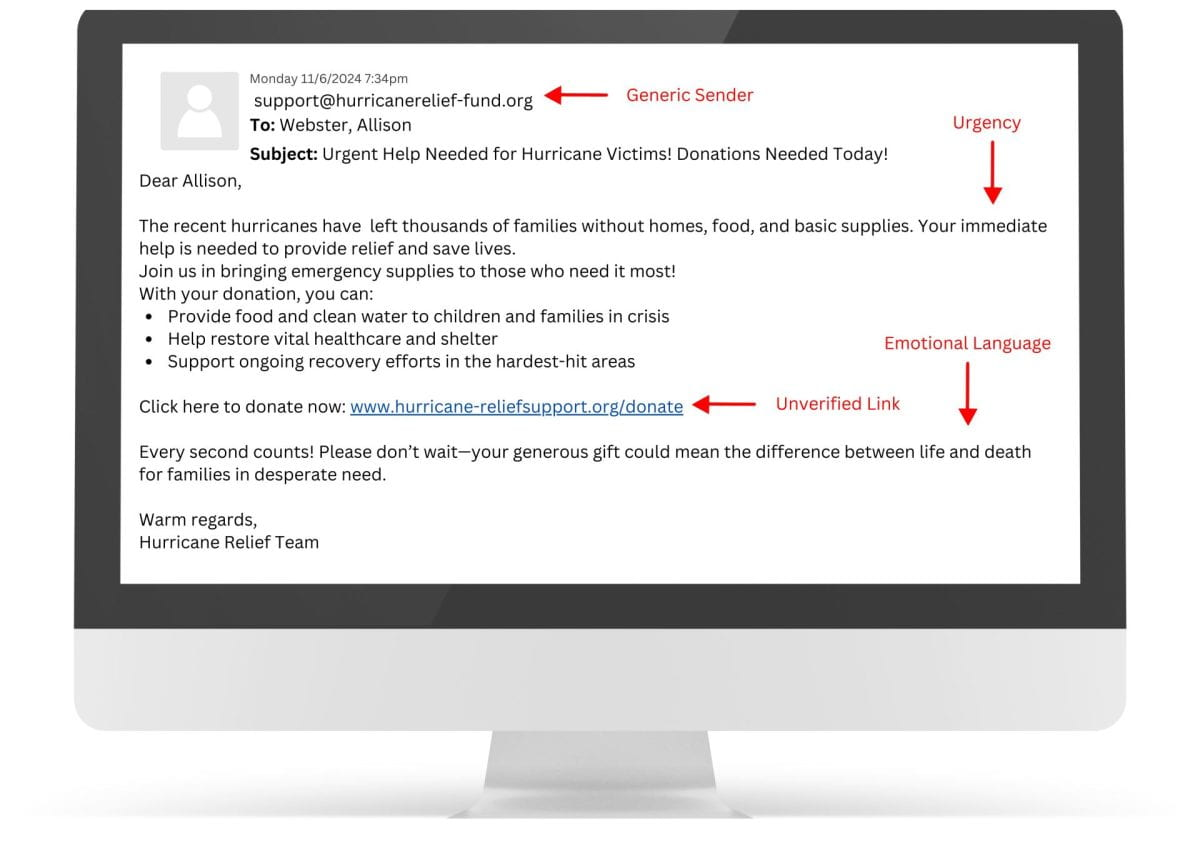
Emails or social posts request donations for seasonal causes, disasters, or community aid, often using emotional language and images.
Red flags to watch for
No registered charity number
Donation requests via cryptocurrency or gift cards
High-pressure language
How to avoid holiday scams related to charities: Verify charities through official registries and donate only via trusted platforms.
Protecting businesses from holiday scams
Holiday scams don’t just target consumers. Businesses face invoice fraud, fake supplier emails, and credential phishing during end-of-year operations.
Organizations can reduce risk through phishing detection, employee training, and brand impersonation monitoring. PhishFort provides automated phishing takedown and threat intelligence services designed to protect both brands and customers during high-risk seasons. Contact us for more information!
Quick checklist to avoid holiday scams
Verify URLs and sender addresses
Avoid clicking links in unexpected messages
Use credit cards for online purchases
Monitor accounts regularly
Educate family and employees on common scam patterns
Final thoughts on how to avoid holiday scams
Understanding how to avoid holiday scams starts with recognizing how real scams look in practice. Visual familiarity reduces reaction time and helps users identify threats before they escalate.
Scammers rely on urgency, distraction, and imitation. Awareness, verification, and caution remain the most effective defenses during the holiday season.
Table of contents
Why holiday scams are so effective
Fake online shopping websites
Holiday phishing emails impersonating retailers
Fake delivery and shipping notification scams
Gift card scams during the holidays
Fake charity scams
Protecting businesses from holiday scams
Quick checklist to avoid holiday scams
Final thoughts on how to avoid holiday scams