
In today’s digital environment, logos represent far more than visual design — they embody customer trust. However, logo infringement has become central to phishing and impersonation schemes. Domain disputes and digital brand abuse reached unprecedented levels in 2025, with a substantial portion of phishing attempts involving brand impersonation where logos serve as the primary tool to override user skepticism. For organizations in 2026, logo protection extends beyond legal departments into essential digital risk management.
What is Logo Infringement in the Cyber Context?
Logo infringement occurs when unauthorized parties deploy trademarked visual identities to deceive, confuse, or defraud users. While traditional infringement appeared on physical locations, digital infringement spreads at internet speed. Three high-risk manifestations include:
- Phishing Clones: High-fidelity replicas of login pages engineered to capture credentials, utilizing high-resolution assets to convince victims they’re on legitimate platforms.
- Social Media Impersonation: Fraudulent profiles mimicking brand visual elements to harvest customer data, orchestrate fake giveaways, or disseminate false information.
- Fake Mobile Apps: Malicious applications in third-party app stores leveraging trusted logos to gain installation confidence, resulting in direct user device data theft.
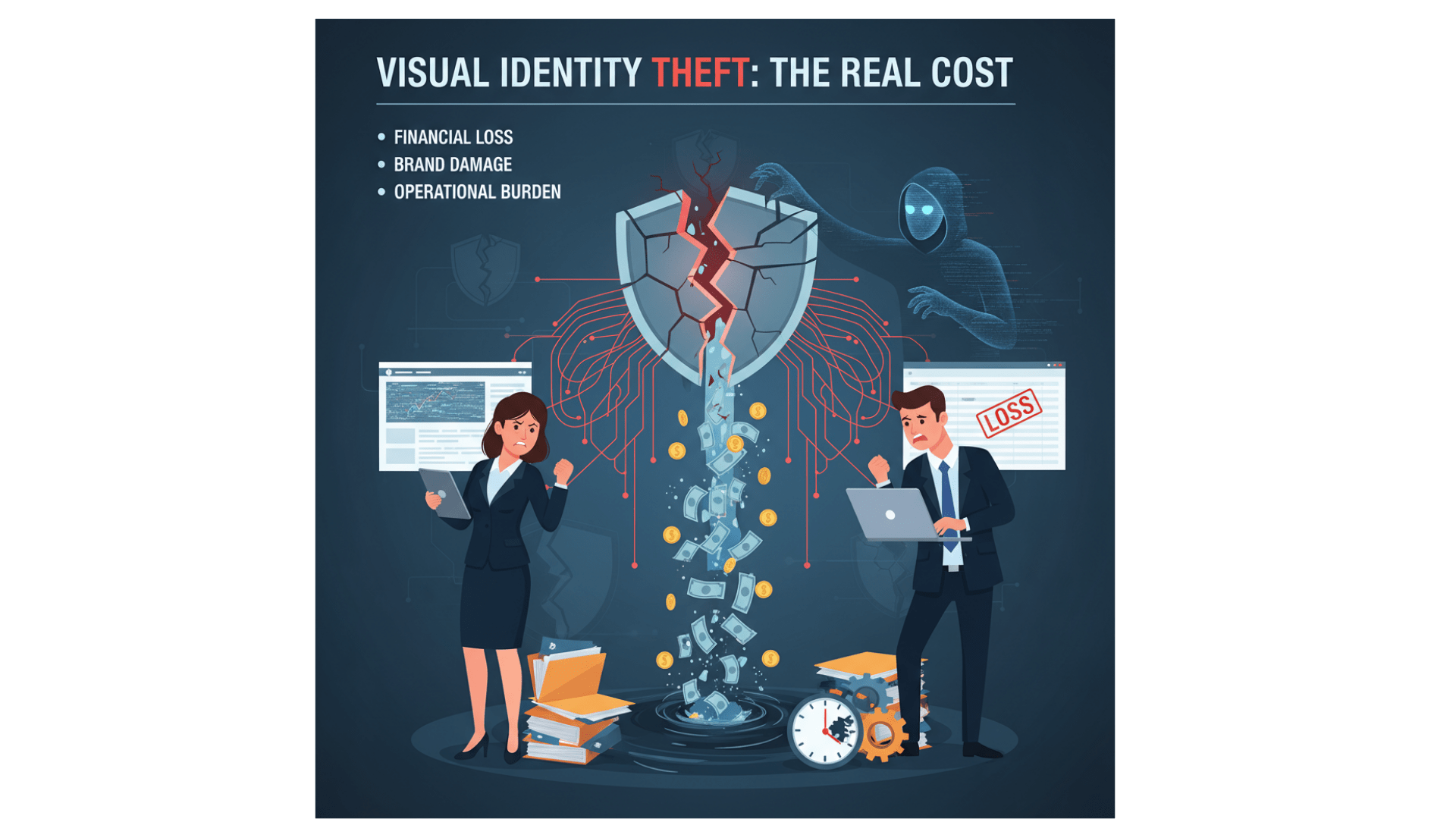
The Real Cost of Visual Identity Theft
When attackers weaponize logos, damage transcends simple confusion. The psychological connection between customers and brands ruptures upon encountering fraudulent materials.
Financial consequences include:
- Direct revenue loss as customers redirect to counterfeit or fraudulent sites
- Reputational deterioration since customers typically blame the legitimate brand rather than perpetrators
- Operational strain from manual takedown efforts that drain resources while providing temporary solutions only
Common Questions About Brand Safety
How do I report logo infringement on social media platforms?
How does AI detect logo infringement?
What is the difference between logo infringement and trademark infringement?
How do you stop attackers who re-upload an infringing logo after a takedown?
From Detection to Takedown: A Proactive Framework
Effective logo infringement mitigation follows the same detection-to-enforcement framework we use across all brand protection work: AI-powered visual monitoring, a continuously updated global blocklist, cross-platform enforcement, and streamlined takedown orchestration.
See the complete breakdown of how each of these works.
What’s specific to logos within that framework is the detection layer itself: threat actors frequently use typosquatting domains or localized social handles that evade standard keyword alerts, so visual recognition, not text matching, is what actually catches a stolen logo. Computer vision identifies logos embedded within images, videos, or PDF documents where text-indexed search typically fails, which is exactly where most logo theft hides.
Final Perspective: Protecting the Eyes of Your Brand
For addressing the vast internet’s blind spots, organizations require comprehensive visibility. Logo infringement frequently initiates larger attack chains encompassing credential theft and financial fraud. Securing visual identity today protects business identity and future viability.
Ready to protect your brand’s visual identity? Contact our team to learn how PhishFort’s digital risk protection platform can secure your logo and brand assets across every digital channel.