
PhishFort Takedown Series — Part 1 of 5
Digital takedowns are often misunderstood as simple “remove this website” requests. In reality, modern takedown operations are highly nuanced processes involving technical analysis, legal considerations, infrastructure providers, hosting environments, registrar policies, evidence validation, and timing.
The Nuance of Takedowns is a content series created to explore these complexities and help security teams better understand the subtle factors that determine whether a takedown succeeds, stalls, or fails entirely.
This pillar guide introduces the core concepts behind the series and connects readers to deeper technical articles covering domain suspension, domain takedowns, malware takedowns, compromised infrastructure, and ccTLD-specific challenges.
The Difference Between Domain Suspension and Domain Takedown
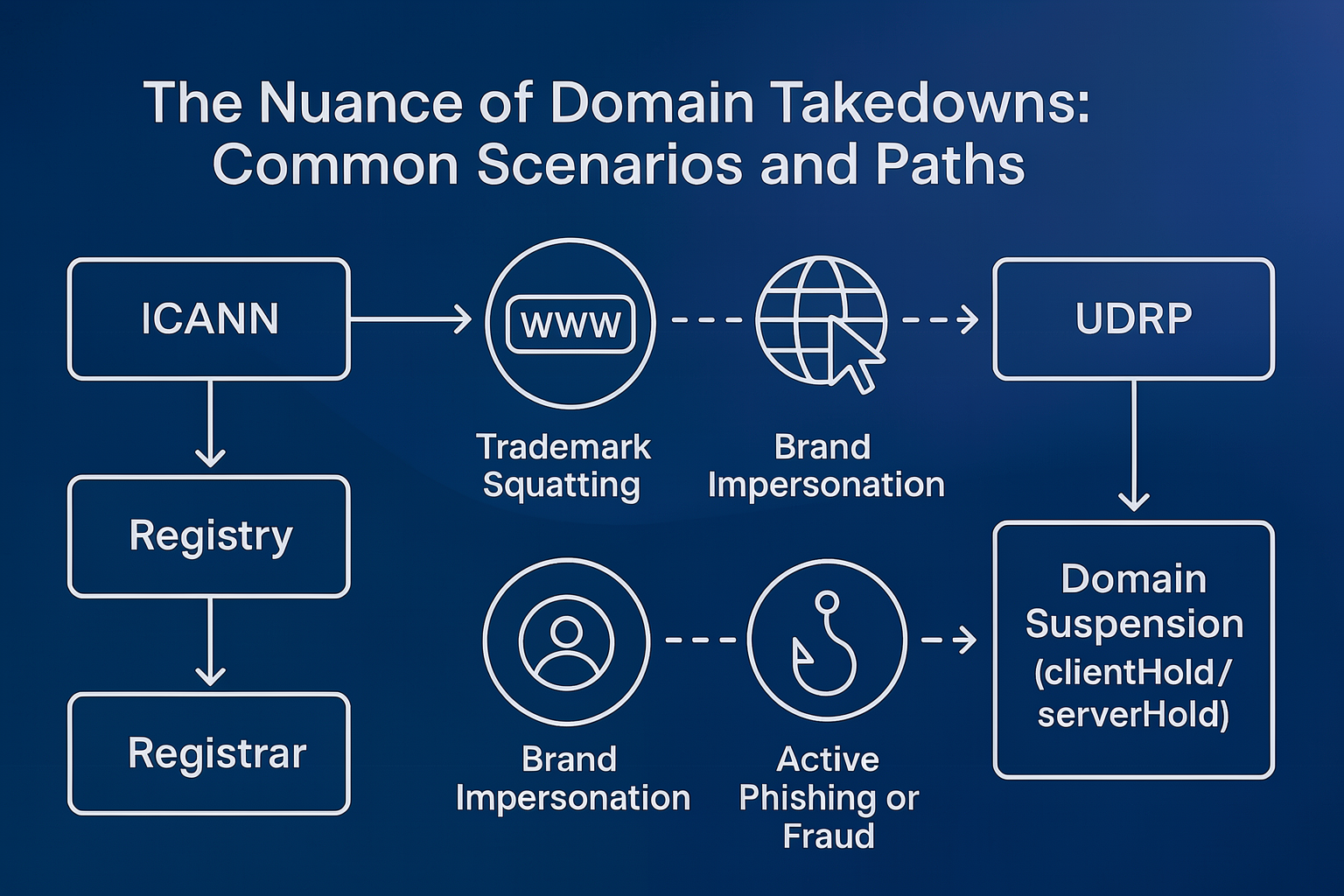
One of the most common misconceptions in cybersecurity and brand protection is assuming that domain suspension and domain takedown mean the same thing.
They do not. A domain suspension impacts the DNS functionality of a domain itself, preventing it from resolving properly. A domain takedown, meanwhile, focuses on removing malicious content or disabling abusive infrastructure hosted behind that domain.
Choosing the wrong approach can delay mitigation, leave phishing infrastructure online longer than necessary, or create operational friction with providers.
Because of this, understanding the distinction is critical for modern incident response and brand protection teams.
For a deeper breakdown of suspension logic, evidence requirements, registrar behavior, and operational considerations, read: Domain Suspension: Key Factors Behind Modern Takedown Decisions
Why Verifying Whether a Website Is Actually Down Matters
Before escalating abuse reports or initiating a takedown workflow, security teams first need to verify whether a website is truly inaccessible.
This sounds simple. It is not.
A website may appear offline because of:
- local ISP filtering
- DNS propagation delays
- CDN routing problems
- geolocation-based blocking
- temporary hosting outages
- firewall restrictions
- browser-level caching issues
- deliberate conditional serving behavior
In phishing and malware investigations, false assumptions during this stage can waste critical response time.
Attackers also increasingly use cloaking techniques that selectively display malicious content only to victims, search engines, or targeted geographies while appearing benign to everyone else.
Understanding these nuances helps teams avoid false positives and prioritize real threats accurately.
For a deeper technical breakdown, visit: The Nuance of Takedowns: The Challenge of the Compromised Site
The Hidden Complexity Behind Malware Takedowns
Malware takedowns introduce an entirely different layer of operational nuance.
Unlike phishing pages that visually impersonate a brand, malware infrastructure often relies on:
- command-and-control servers
- DGAs (Domain Generation Algorithms)
- compromised infrastructure
- fast-flux DNS
- payload delivery systems
- redirect chains
- bulletproof hosting
- encrypted callback communications
The challenge is not simply identifying malicious activity. The challenge is proving it clearly enough for registrars, registries, and hosting providers to take action quickly.
In many cases, takedown success depends less on the sophistication of the technical analysis and more on how effectively the evidence is communicated.
This includes:
- sandbox screenshots
- behavioral indicators
- VirusTotal validation
- simplified impact explanations
- infrastructure correlation
- malware execution evidence
Our dedicated malware takedown guide explores how practitioners can bridge this communication gap effectively.
Why Compromised Infrastructure Creates Takedown Challenges
Not all malicious websites are hosted on infrastructure controlled directly by threat actors.
Many campaigns operate through:
- compromised WordPress websites
- hijacked subdomains
- abused cloud infrastructure
- infected legitimate servers
- hacked business websites
This creates a major operational challenge because providers are often dealing with legitimate customers who are themselves victims.
In these cases, the takedown objective shifts from simply “removing a bad domain” toward coordinating remediation while minimizing collateral damage.
Understanding the difference between malicious ownership and compromised infrastructure is critical for effective response workflows.
Explore the deeper analysis here: The Nuance of Takedowns: The Challenge of the Compromised Site
How ccTLD Policies Complicate Enforcement
Country-code top-level domains (ccTLDs) introduce another major layer of nuance into takedown operations.
Every ccTLD operates differently.
Some registries respond rapidly to abuse reports. Others require:
- court documentation
- localized evidence
- trademark proof
- law enforcement coordination
- specific reporting formats
- jurisdictional escalation
Timelines, policies, and thresholds vary significantly depending on the registry and region involved.
Because of this fragmentation, takedown workflows that succeed instantly in one TLD may completely fail in another.
Our ccTLD-focused breakdown explores these regional and operational complexities in detail.
Read more here: The Nuance of Takedowns: Using Country-Code TLDs (ccTLDs)
The difference between a successful mitigation and a missed threat often comes down to recognizing subtle indicators before campaigns scale.
That is the core philosophy behind The Nuance of Takedowns:
Small details shape outcomes.
Organizations that understand these subtleties can respond faster, reduce user exposure, improve takedown success rates, and minimize operational risk.
Additional Resources
Modern takedown operations require a combination of:
- threat intelligence
- infrastructure analysis
- registrar coordination
- evidence validation
- escalation workflows
- legal understanding
- operational timing
If your organization needs support navigating phishing takedowns, malware infrastructure disruption, domain suspension workflows, or broader brand protection operations, explore PhishFort’s takedown capabilities here.
Many global brands trust PhishFort to help detect, investigate, and disrupt malicious infrastructure at scale.