


A web threat defense service is designed to protect organizations from malicious activity targeting their digital presence. As attackers increasingly operate outside traditional network perimeters, web-based threats have become one of the most common and damaging attack vectors.
From phishing sites and fake domains to impersonation and scam infrastructure, modern threats demand continuous visibility, fast detection, and rapid response.
What Is a Web Threat Defense Service?
A web threat defense service focuses on identifying, monitoring, and removing malicious assets that exist on the public internet and are used to target brands, employees, and customers.
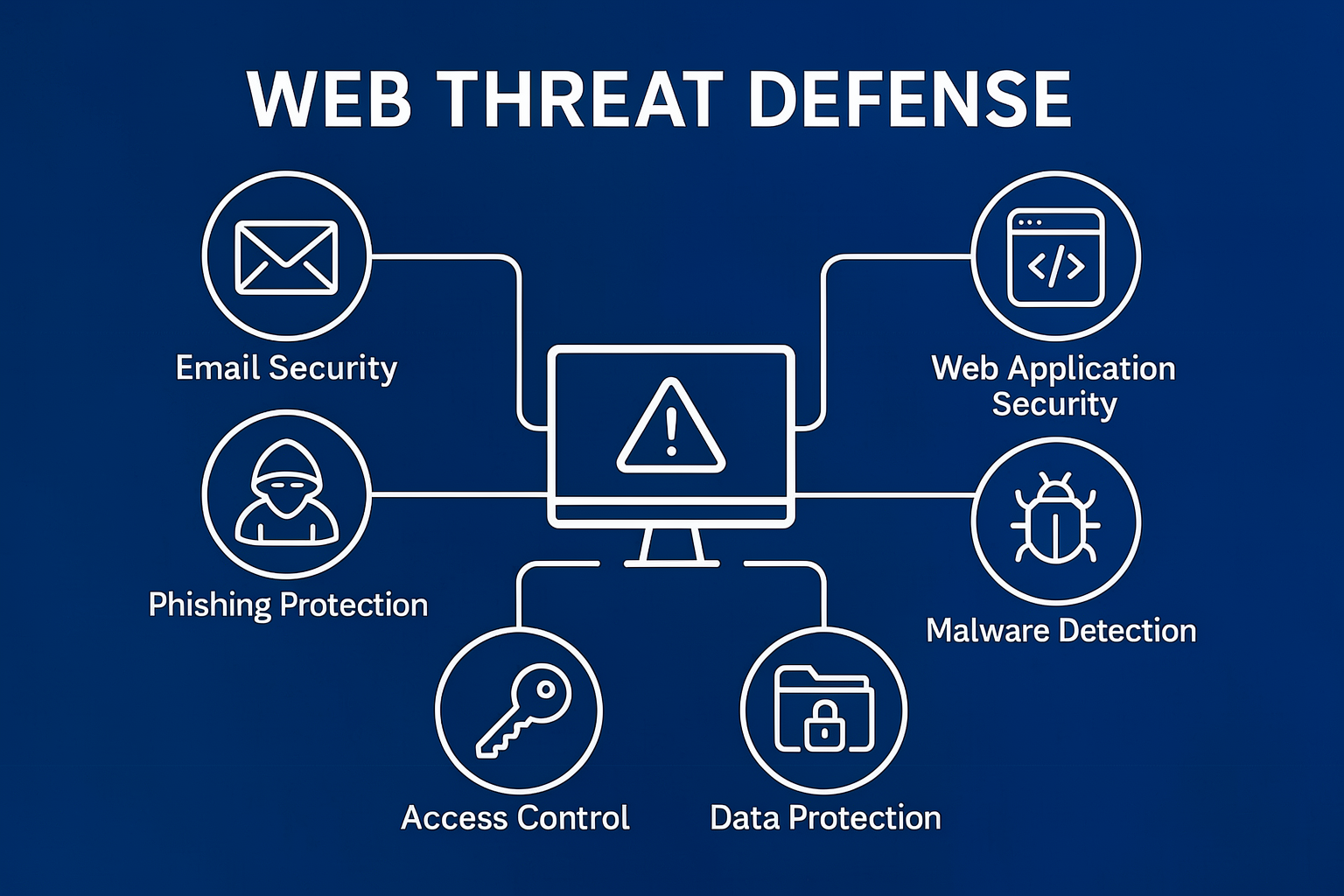
These services typically address threats such as:
Phishing websites
Lookalike and typosquatted domains
Fake brand or executive profiles
Scam campaigns and fraudulent pages
Malicious infrastructure linked to brand abuse
Unlike traditional security tools, web threat defense operates outside the organization’s internal environment, where most attacks now originate.
Why Web-Based Threats Are Hard to Control
Web threats evolve quickly and are designed to evade static controls. Attackers benefit from:
Low cost of the domain and infrastructure setup
Short-lived campaigns that disappear quickly
Global hosting and jurisdictional complexity
Legitimate-looking content with no malware
As a result, many organizations only discover web threats after users or customers are already impacted.
Common Use Cases for a Web Threat Defense Service
Phishing and Fraud Prevention
Threat actors deploy convincing phishing pages that imitate login portals, payment flows, or customer support sites. A web threat defense service detects these assets early and enables rapid takedown.
Brand and Domain Protection
Lookalike domains and fake websites are commonly used to exploit brand trust. Monitoring domain registrations and web content helps organizations detect abuse before it scales.
Executive and Employee Impersonation
Web-based impersonation — including fake profiles, scam pages, and cloned websites — is frequently used to support social engineering campaigns targeting internal teams and external partners.
Customer Trust and Reputation Protection
When customers encounter fraudulent sites or scams using a brand’s identity, trust erodes quickly. Web threat defense helps minimize exposure and reputational damage.
How a Web Threat Defense Service Works
An effective web threat defense service combines:
Continuous monitoring of domains, web content, and online assets
Automated detection of malicious patterns and indicators
Accuracy at scale to reduce false positives
Rapid response workflows to disable or remove threats
Detection alone is not enough. The real value lies in how quickly malicious assets can be validated and disrupted.
Detection and Removal at Speed
Web threats are time-sensitive. The longer a malicious site or domain remains live, the higher the likelihood of successful exploitation.
A mature web threat defense service enables teams to:
Detect threats early
Prioritize based on risk and exposure
Quickly remove or neutralize malicious infrastructure
This approach reduces operational burden while significantly lowering overall risk.
Why Web Threat Defense Is a Business Requirement
Web-based threats impact more than security teams. They affect:
Brand reputation
Customer trust
Financial performance
Legal and compliance exposure
Treating web threat defense as a reactive task leaves organizations vulnerable. Continuous protection is now a baseline requirement.
Industry Context
According to cybersecurity research and law enforcement reporting , phishing and web-based fraud remain among the most prevalent and costly forms of cybercrime worldwide.
Final Thoughts
A web threat defense service provides organizations with the visibility and response capabilities needed to operate safely in an environment where threats live on the open internet.
By combining continuous monitoring, accurate detection, and rapid removal, organizations can reduce exposure, protect trust, and stay ahead of evolving web-based threats.