

Digital risk protection services play a vital role in modern cybersecurity strategies. As attackers increasingly operate outside corporate networks, organizations must protect not only internal systems but also their external digital presence.
From phishing websites and fake domains to social media impersonation and mobile app abuse, external threats directly target customers and brand trust. Digital risk protection services and tools (often called DRPS) address this challenge by providing visibility and response capabilities across the open web, dark web, and social platforms.
What Are Digital Risk Protection Services?
DRPS are designed to identify, analyze, and eliminate digital threats that exist beyond an organization’s perimeter. They focus on attacker-controlled infrastructure rather than internal endpoints, monitoring for phishing domains, brand impersonation, fake mobile applications, leaked credentials, and fraud campaigns.
Unlike traditional security tools, DRPS act where attacks originate. Some organizations still associate this space with legacy terms like “digital risk protection (DRP),” but modern services are far more comprehensive and proactive than that label suggests.
How Digital Risk Protection Services Work
DRPS begin by mapping an organization’s digital footprint: official domains, subdomains, email infrastructure, mobile apps, and social media profiles.
Once that baseline is established, continuous monitoring scans for suspicious activity across domain registrations, hosting environments, certificate issuance, marketplaces, and social networks. Machine learning models analyze similarities in domain names, page structure, branding, and content behavior to flag likely threats.
When a threat is confirmed, response workflows initiate takedowns and disruption actions through registrars, hosting providers, and platforms. Providers like PhishFort combine automation with expert-led investigation to keep both accuracy and speed high, integrating with email security ecosystems from companies like Microsoft and Google to block phishing campaigns end to end.
Attackers exploit trusted brands rather than technical vulnerabilities. They clone login portals, spoof executives, and impersonate companies on social media to deceive users directly, and DRPS exist specifically to stop that before customers ever interact with it.
Key Capabilities
External threat monitoring. Continuous visibility across domains, IP ranges, social platforms, app stores, and dark web forums, so threats are caught early rather than after customer impact.
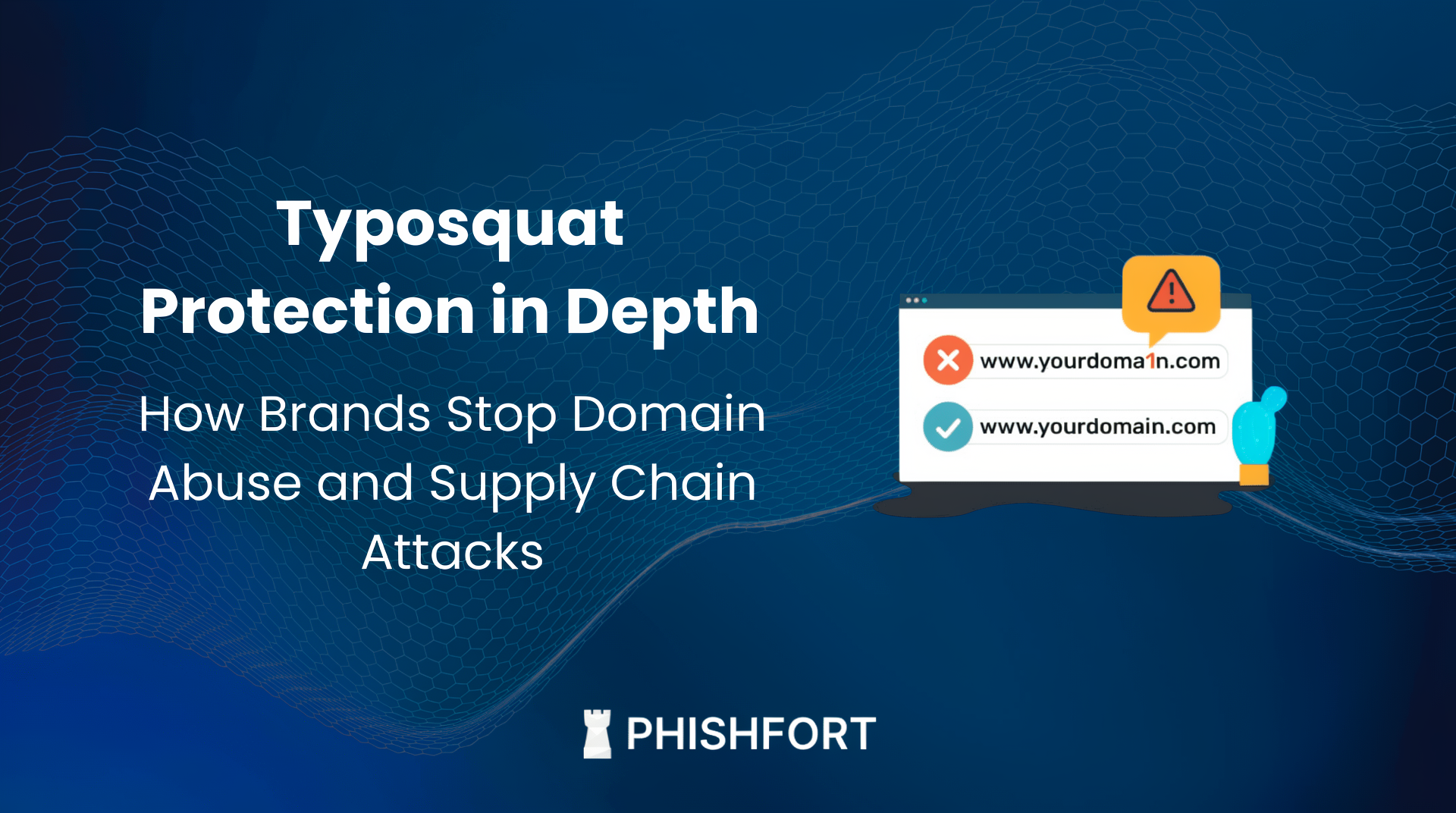
Phishing and impersonation detection. Identifying fake login pages, cloned websites, spoofed emails, and fraudulent social media profiles abusing brand identity.
Automated takedowns. Reducing takedown times from days to hours, significantly limiting how long attacker infrastructure stays live.
Threat intelligence and reporting. Actionable intelligence on attacker infrastructure, recurring campaigns, and behavior patterns that strengthens broader security operations.
Compliance and brand trust. Proactively addressing external threats supports regulatory compliance and keeps customer confidence intact.
Real-World Use Cases
Financial services. Banks and payment providers rely on DRPS to detect phishing domains and credential-harvesting campaigns targeting customers.
SaaS platforms. A SaaS technology provider facing credential phishing attacks against its login portal used DRPS to detect cloned login pages early and block attacker infrastructure before campaigns scaled. Result: account takeovers were prevented and incident response workload dropped significantly.
E-commerce and retail. An international e-commerce brand facing constant social media impersonation and fake promotional campaigns used DRPS to identify fraudulent profiles across multiple platforms and coordinate rapid removals. Result: a significant reduction in scam reports and brand abuse across social channels.
In each scenario, external threat visibility reduces both incident response costs and customer harm.
DRPS vs. Traditional Security Tools
Traditional security tools, firewalls, EDR, endpoint protection, protect internal assets: endpoints, networks, cloud environments. They stop threats after those threats reach your users.
DRPS protect the external attack surface instead, disrupting attacker infrastructure at the source, before it reaches your customers. This is why the question “why is digital risk protection essential” comes up so often: most successful attacks never touch internal defenses at all, they succeed entirely outside the perimeter, using your brand and your customers’ trust as the attack surface.
Used together, traditional tools and DRPS create a genuinely complete security posture. Neither replaces the other.
How to Choose the Right DRPS Provider
When evaluating providers, a few things matter more than a long feature checklist:
- Coverage breadth. Does it monitor new TLDs, social platforms, app stores, and emerging channels continuously, not just the obvious ones?
- Response speed. How fast does detection turn into an actual takedown? Hours matter more than days here.
- Automation plus human judgment. Full automation alone tends to generate false positives; fully manual review doesn’t scale. Look for both working together.
- Managed vs. self-serve. Managed services reduce internal workload and tend to handle complex takedowns (registrar disputes, cross-jurisdiction cases) far better than a pure self-serve dashboard.
PhishFort combines automation with expert-led investigation and takedown workflows, reducing the burden on internal teams while keeping accuracy high. For broader context, industry research from ENISA and APWG reinforces just how central external threat mitigation has become to modern security strategy.
Where This Is Heading
DRPS continues to evolve alongside the threats it defends against: faster AI-driven detection, tighter takedown automation, and deeper integration with SOC platforms. As attackers expand into new platforms and regions, DRPS is becoming essential for organizations of every size, not just large enterprises with dedicated security teams.
Why This Matters Now
Digital risk protection services identify and remove phishing, impersonation, and fraud early, reducing risk and preserving trust before it’s tested. Solutions like PhishFort monitor for phishing sites, brand impersonation, fake domains, counterfeit mobile apps, and leaked credentials, then automate investigation and takedown to minimize how long any of it stays live.
If your brand has customers online, this isn’t optional anymore.
See how PhishFort identifies and removes digital threats in real time →